
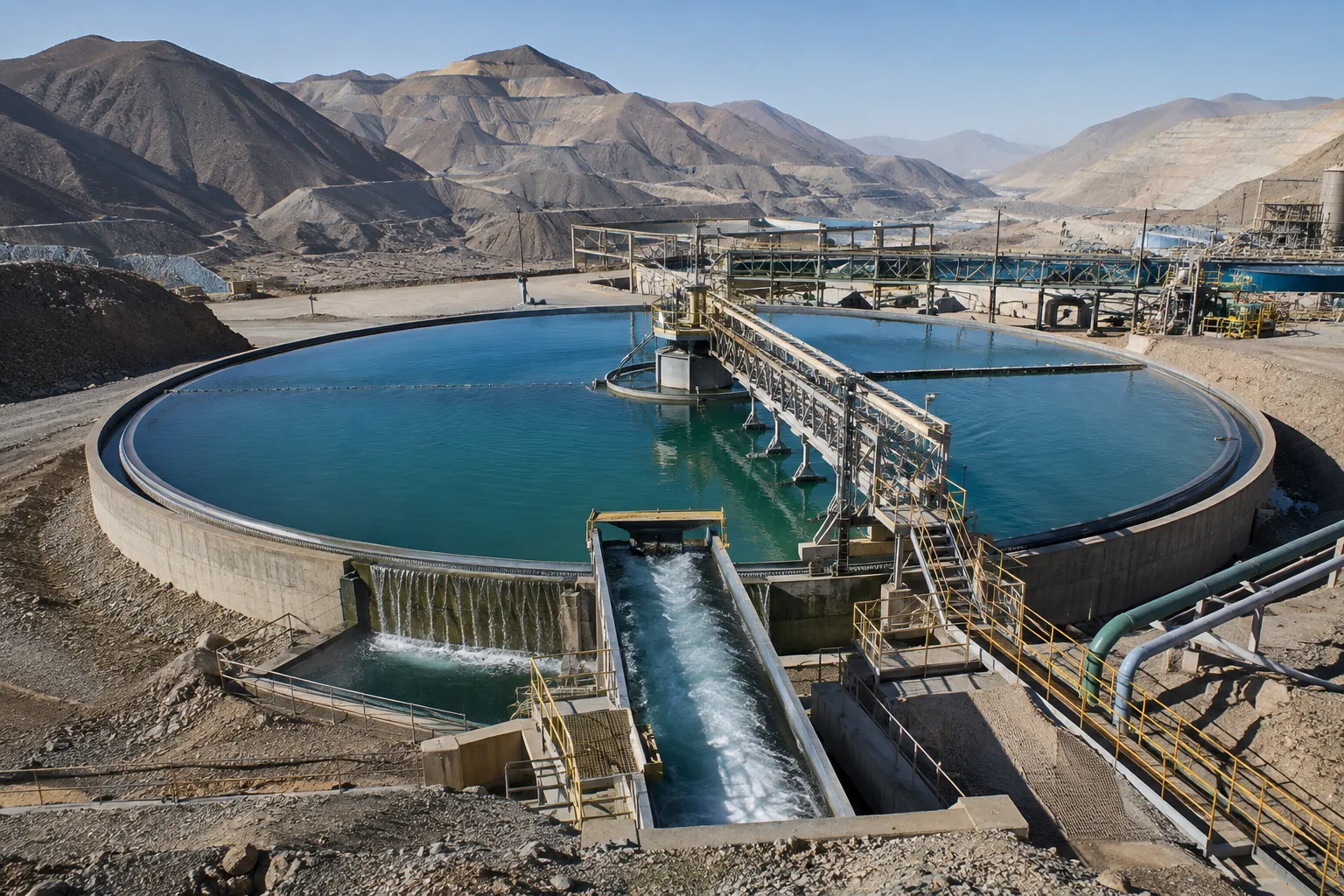
Set the circuit boundary
Identify the sampling point, mineral feed, washing or concentration stage and any reused process water. State whether treatment is intended to improve overflow reuse, settling, filtration or underflow handling.
Document changes upstream of the polymer addition point. A different feed blend or conditioning dose can change the result without any change in supplied polymer.
Retain comparable observations
Keep mixing, dose units and observation time visible in the comparison. Measure the liquid endpoint alongside interface or bed behavior. Avoid selecting from floc size alone.
A sample that has aged or settled during transport may not reproduce normal feed. Record this limitation and decide whether plant evidence is needed before the manufacturer is approved.
Include preparation capability
Confirm that the available water and preparation equipment suit the proposed supplied form. An attractive separation result is incomplete if the plant cannot maintain consistent delivery.
Compare the anionic proposal with any justified nonionic candidate. Keep supplier explanations attached to the actual sample codes.
Separate product and service evidence
Application performance answers whether the material is promising. Traceable documents, stable identification and a useful response to questions answer whether supply can be managed reliably. Neither question replaces the other.
Use the manufacturer qualification record and preserve measurement methods for resolving inconsistent results.
Connect the requirement with the order
Review Anionic Polyacrylamide Manufacturers: Mineral-Process RFQ, PAM Powder Manufacturers: Check Feeder and Make-Down Fit before finalizing the supply proposal. Keep product identity, practical preparation and pending acceptance evidence attached to the quotation.