
Start with identity and the reported property
Confirm that both laboratories tested the same product and relevant lot. Identify whether a value is a batch result, typical technical figure or agreed release limit. Comparing a new measurement with an old catalogue value is not the same as repeating a batch test.
Ask what property was measured and how it was reported. A broad molecular-weight descriptor and a measured solution viscosity are not interchangeable evidence. Preserve the actual method reference instead of relying only on the property name.
Compare preparation and measurement conditions
Check concentration basis, water, preparation time, temperature and equipment where these are relevant to the method. Confirm units and whether the reported result is a mass fraction, concentration or another defined quantity. Record rounding and reporting limits.
Do not silently average incompatible results. If the agreed method is absent, request clarification before deciding whether the material passes or fails. A common method is necessary for a meaningful comparison but does not erase every source of uncertainty.
Separate analytical and application questions
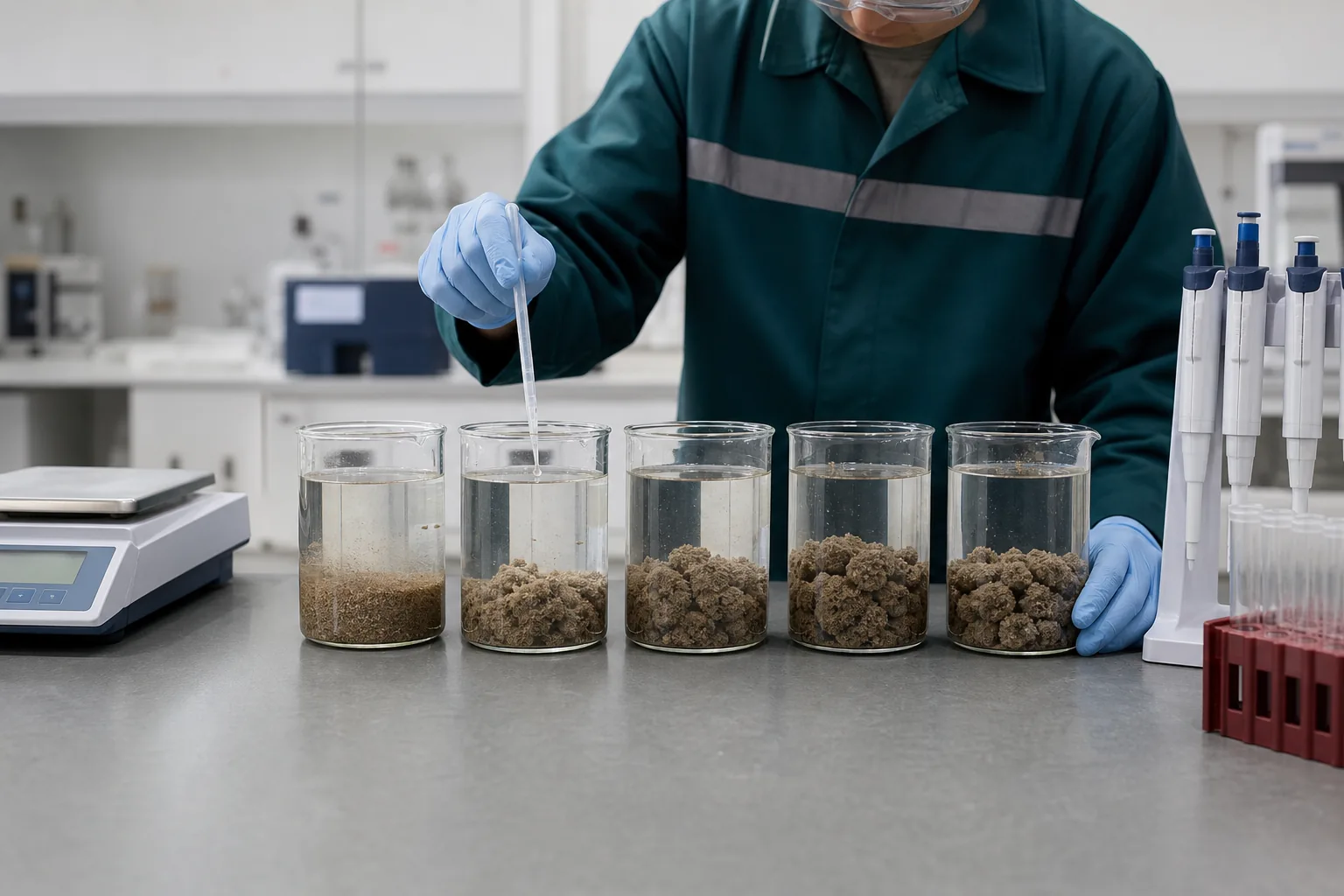
A laboratory release measurement and a plant separation trial answer different questions. A product may satisfy an analytical limit while requiring further application investigation. Conversely, a favorable beaker result does not resolve a document discrepancy.
Use representative feed and an identified control when the disagreement concerns treatment response. Preserve preparation and equipment conditions. Avoid using a process change to explain a laboratory difference without evidence connecting them.
Agree the next comparison
Define the sample, method, responsible parties and reporting format before retesting. If independent analysis is appropriate, agree its scope rather than assuming any third-party result will answer the original question. Keep unresolved issues visible in the release decision.
The sample record supports identity and condition checks. Use the agreed supply requirements and a focused quality enquiry to keep the discussion factual.
Use the evidence in the next purchase
For the corresponding order decision, compare High Molecular Weight PAM: Manufacturer Specification Checks, Cationic PAM Charge Density: What Buyers Should Specify, PAM Manufacturer COA: Typical Values vs Batch Release Results, Residual Acrylamide in PAM: Manufacturer Evidence Buyers Need. Retain the material identity and the limits of the operating evidence with the commercial request.