
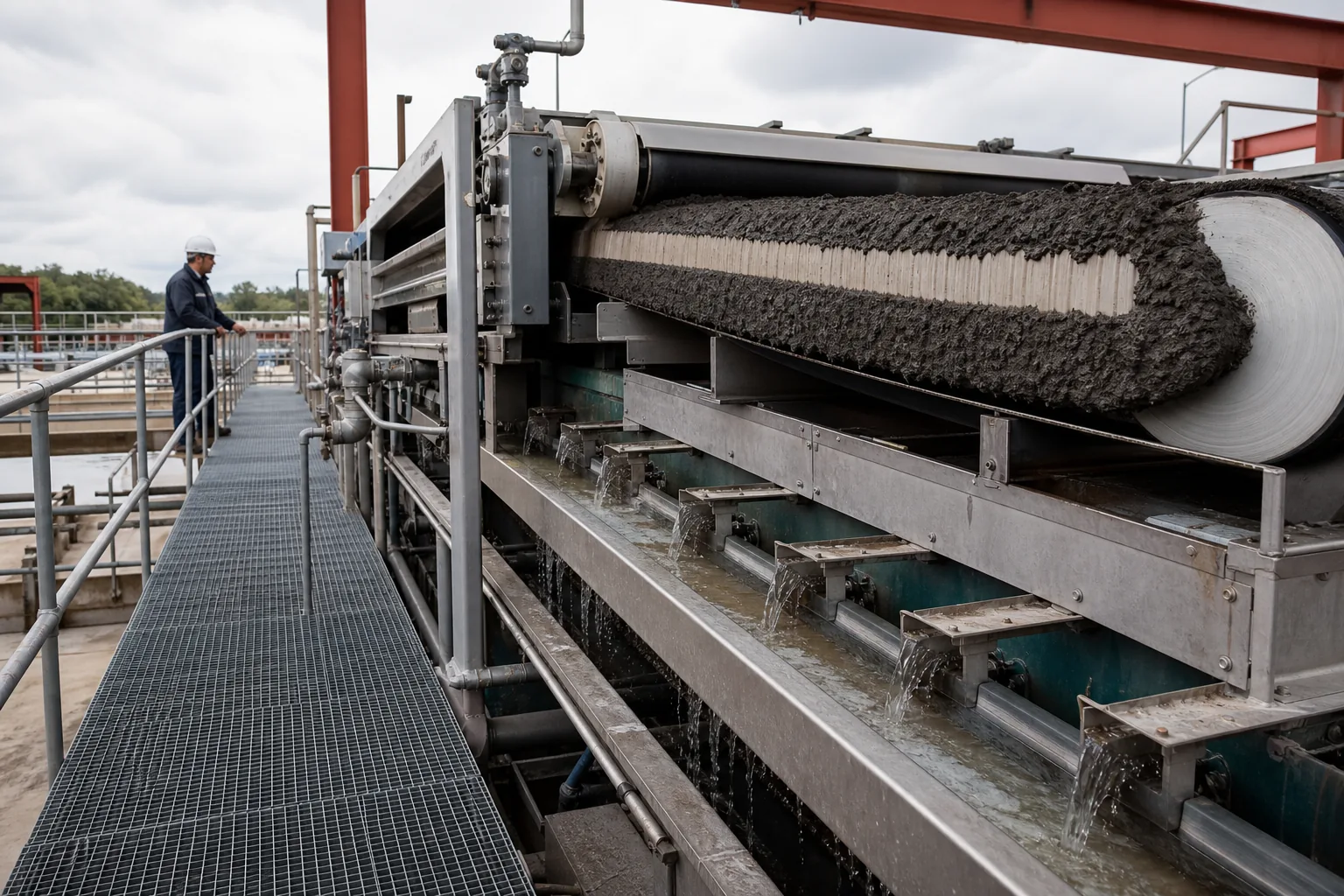
Define the acceptable operating result
State which limitation the proposed polymer must address. Capture, cake handling, throughput and chemical consumption may pull in different directions. Agree the minimum acceptable outcomes before comparing candidates.
Record the current settings and material so the incumbent provides a meaningful control. A proposed replacement should not receive credit for an unrelated change in machine operation.
Record feed and preparation together
Describe the sludge source, measured solids, upstream conditioning and collection period. Note any known process variation that was absent from the trial. A limited sample can support screening without justifying unrestricted approval.
Use each candidate's confirmed preparation instructions. Check solution availability and delivery rather than assuming nominal feeder settings establish an equal dose.
Compare under bounded plant conditions
Agree the observation period, operator responsibilities and stopping criteria. Follow the plant's safety process for any operational adjustment. Preserve both a positive result and an unresolved limitation in the record.
When qualifying a second manufacturer, keep supply continuity distinct from chemical equivalence. An additional source may still require separate approved settings.
Translate the result into supply terms
Keep the approved product code and preparation conditions with the purchase requirement. State how a discrepancy will be escalated and what evidence should accompany the first delivery.
Review cationic product evaluation and ongoing supply controls. A laboratory or plant observation should not become a broader performance guarantee than the conditions support.
Connect the requirement with the order
Review Cationic PAM Manufacturers for Sludge Centrifuges: Buying Checks, Polyacrylamide Emulsion Manufacturers: Activation Before Approval before finalizing the supply proposal. Keep product identity, practical preparation and pending acceptance evidence attached to the quotation.