Introduction
If you are searching what is polyacrylamide made of, you are likely trying to understand the chemistry behind one of the world’s most widely used industrial polymers. Polyacrylamide plays an essential role in wastewater treatment, mining, oil recovery, paper production, agriculture, and many other sectors. Yet despite its importance, many people are unfamiliar with what this material actually contains.
Polyacrylamide is not a naturally occurring substance. It is a synthetic polymer carefully engineered from smaller chemical building blocks that are linked together into long molecular chains. These chains give the product its remarkable ability to thicken water, bind particles, improve settling, reduce friction, and support industrial separation processes.
In this in-depth guide, you will learn exactly what polyacrylamide is made of, how manufacturers produce it, the difference between monomers and polymers, the role of additives, available product forms, safety considerations, and why composition matters when selecting a grade.
What Is Polyacrylamide Made Of?
At its core, polyacrylamide is made of acrylamide monomers that have been chemically linked together into long polymer chains.
That means the basic raw ingredient is:
- Acrylamide – a small organic molecule used as the starting monomer
During manufacturing, many acrylamide molecules react through polymerization and become one large chain molecule called polyacrylamide.
In simple terms:
- Acrylamide = small building block
- Polyacrylamide = many building blocks connected together
This transformation creates a high-molecular-weight polymer with properties very different from the original monomer.
The Main Chemical Ingredient: Acrylamide
To fully answer what is polyacrylamide made of, we start with acrylamide.
What Is Acrylamide?
Acrylamide is an organic compound with the formula:
C₃H₅NO
It contains:
- Carbon
- Hydrogen
- Nitrogen
- Oxygen
Acrylamide is reactive because it includes a double bond that allows molecules to join together during polymerization.
Why Acrylamide Is Used
Manufacturers use acrylamide because it can create polymers with:
- Excellent water solubility
- High molecular weight
- Strong adsorption properties
- Thickening behavior
- Flocculation performance
This makes it ideal for industrial polymer production.
How Polyacrylamide Is Formed
Polyacrylamide is created through a process called polymerization.
Polymerization Explained Simply
During polymerization:
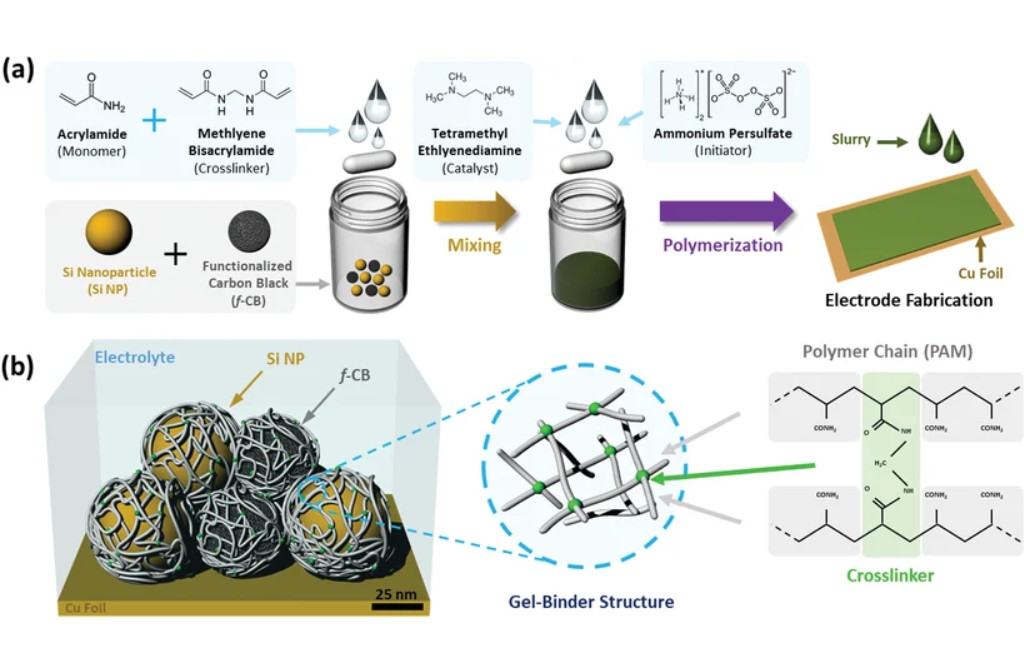
- Acrylamide monomers are mixed in water.
- Chemical initiators start a chain reaction.
- Double bonds open and connect molecules.
- Thousands or millions of units link together.
- Long-chain polyacrylamide molecules form.
The repeating structure can be represented as:
(C₃H₅NO)n
Where n means the chain repeats many times.
What Else Is Polyacrylamide Made Of Besides Acrylamide?
Commercial polyacrylamide products often include more than just polymer chains. Depending on the product type, they may also contain:
1. Functional Comonomers
Used to create charged versions of polyacrylamide.
Examples:
- Acrylic acid
- Sodium acrylate
- Cationic quaternary monomers
These modify performance.
2. Water
Many liquid and emulsion products contain water as a carrier.
3. Oil Phase (Emulsions)
Some emulsion products include oils and surfactants.
4. Stabilizers
Help maintain shelf life and product consistency.
5. Processing Aids
Used in manufacturing and product handling.
Different Types Based on Composition
Not all polyacrylamide has the same formula. Composition changes depending on the intended use.
Anionic Polyacrylamide
Contains negatively charged groups, usually from:
- Acrylic acid
- Sodium acrylate
Used for:
- Mining
- Sand washing
- Clarification
- Inorganic sludge settling
Cationic Polyacrylamide
Contains positively charged groups from cationic monomers.
Used for:
- Sludge dewatering
- Municipal wastewater
- Organic solids treatment
Nonionic Polyacrylamide
Contains mainly neutral acrylamide units.
Used in:
- Special chemical systems
- Selected mineral processes
Amphoteric Polyacrylamide
Contains both positive and negative groups.
Useful when water chemistry fluctuates.
Why the Ingredients Matter
Understanding what is polyacrylamide made of helps buyers choose the right product.
Charge Type Controls Performance
Positive or negative groups determine what particles the polymer attracts.
Molecular Weight Affects Strength
Longer chains usually improve bridging and floc size.
Solubility Impacts Preparation Time
Different formulas dissolve at different speeds.
Stability Influences Shelf Life
Liquid and powder products behave differently.
Physical Forms and Their Ingredients
Polyacrylamide is sold in several commercial forms.
Powder Polyacrylamide
Made mostly of dry polymer particles.
Contains:
- Active polymer
- Low moisture content
Benefits:
- High concentration
- Lower shipping cost
- Long shelf life
Emulsion Polyacrylamide
Contains:
- Polymer droplets
- Water
- Oil phase
- Emulsifiers
Benefits:
- Faster inversion
- Easy automated feeding
Liquid Solution Polyacrylamide
Contains:
- Pre-dissolved polymer in water
Benefits:
- Convenient dosing
- No powder handling
Is Polyacrylamide Natural or Synthetic?
Polyacrylamide is a synthetic polymer, meaning it is manufactured through industrial chemical processes.
It is not directly extracted from plants or minerals.
However, it is often used in environmentally beneficial processes such as:
- Water purification
- Waste reduction
- Recycling systems
- Soil erosion control
What Elements Are in Polyacrylamide?
From a chemistry standpoint, polyacrylamide is made of:
- Carbon (C)
- Hydrogen (H)
- Nitrogen (N)
- Oxygen (O)
Additional elements may appear in modified products, such as:
- Sodium (Na) in sodium acrylate forms
- Chloride depending on cationic monomers
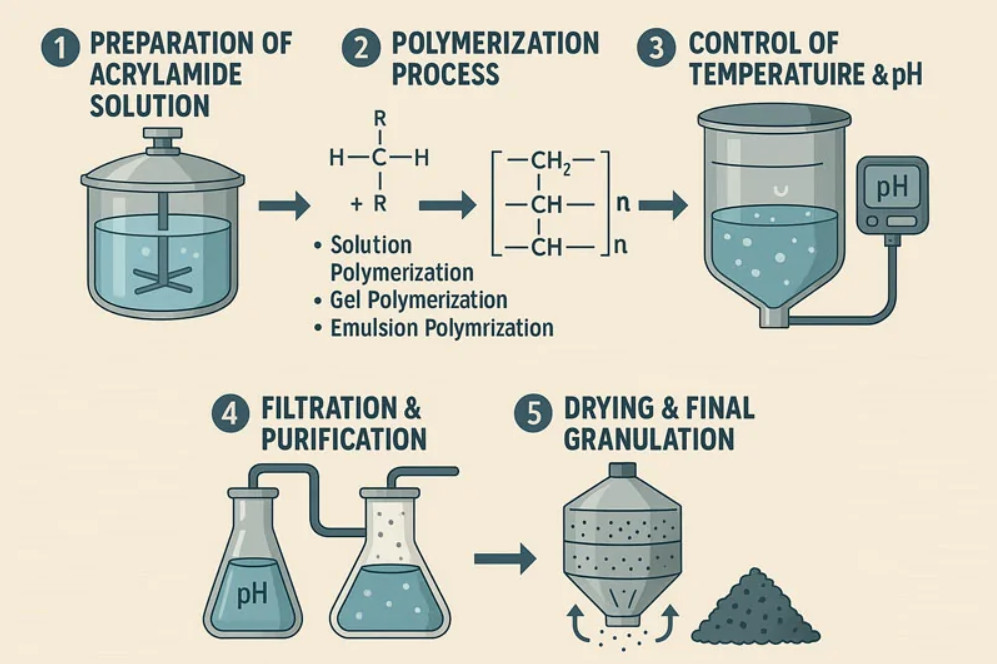
How Manufacturers Make Polyacrylamide Commercially
Industrial production can vary, but the general process includes:
Step 1: Raw Material Preparation
Monomers and water are blended.
Step 2: Polymerization Reaction
Temperature and initiators are controlled.
Step 3: Gel Formation
Polymer forms as a gel mass.
Step 4: Drying or Emulsification
Depending on final product type.
Step 5: Grinding / Packaging
Powder products are milled and packed.
Step 6: Quality Testing
Manufacturers test:
- Molecular weight
- Charge density
- Residual monomer
- Dissolution speed
- Moisture content
Why Polyacrylamide Works So Well
Its composition gives it unique advantages.
Long Chain Structure
Allows bridging between particles.
Water Solubility
Makes dosing practical in treatment systems.
Adjustable Charge
Allows targeting of specific contaminants.
High Efficiency
Low doses often achieve strong results.
Industries That Depend on Polyacrylamide Composition
Different sectors require different formulations.
Water Treatment
Needs polymers matched to sludge or suspended solids.
Mining
Requires strong anionic grades.
Paper Mills
Need retention and drainage performance.
Oilfields
May use high molecular weight specialty grades.
Agriculture
Uses soil conditioning formulations.
Is Polyacrylamide Safe?
One common concern when asking what is polyacrylamide made of is safety.
Polyacrylamide vs Acrylamide
This distinction is essential.
- Polyacrylamide = finished polymer
- Acrylamide = monomer raw material
Commercial manufacturers aim to keep residual acrylamide low according to quality and regulatory requirements.
Safe Handling Practices
Use standard precautions:
- Gloves
- Eye protection
- Dust control for powders
- Proper storage
Spill Note
Wet polymer surfaces can be slippery.
Common Myths About What Polyacrylamide Is Made Of
Myth 1: It Is Made of Plastic Waste
False. It is chemically synthesized from monomers, not recycled plastic.
Myth 2: It Is Only One Formula
False. Many charge types and molecular weights exist.
Myth 3: All Products Are the Same
False. Performance varies significantly by composition.
Myth 4: It Is Used Only in Water Plants
False. Many industries rely on it.
How to Choose Based on Composition
When buying polyacrylamide, ask suppliers about:
- Charge type
- Molecular weight
- Active content
- Residual monomer level
- Recommended application
- Dissolution time
- Shelf life
Composition should match your system—not just price.
Storage Considerations
Because of its ingredients, polyacrylamide should be stored correctly.
Powder Products
- Keep dry
- Protect from humidity
- Seal bags after opening
Emulsions
- Protect from freezing
- Avoid overheating
- Mix gently before use if required
Future Innovation in Polyacrylamide Formulation
Manufacturers continue improving what polyacrylamide is made of through:
- Faster dissolving powders
- Lower residual monomer technology
- Higher efficiency grades
- Better cold-water performance
- More sustainable production methods
This keeps the product relevant for modern industry.
Frequently Asked Questions
What is polyacrylamide mainly made of?
It is mainly made from polymerized acrylamide monomers.
Is polyacrylamide made of plastic?
No. It is a synthetic water-soluble polymer, not common plastic resin.
Does polyacrylamide contain water?
Dry powders contain little moisture, but liquid and emulsion products may contain water.
Why are there different types?
Manufacturers modify composition to create anionic, cationic, nonionic, or amphoteric grades.
Is polyacrylamide biodegradable?
Behavior depends on formulation and environmental conditions, but it is generally used in controlled industrial processes.
Buying Advice for Businesses
If sourcing polyacrylamide, choose suppliers that provide:
- Clear composition data
- Technical support
- Application testing
- Stable manufacturing quality
- Consistent batch performance
- Export documentation
A cheaper unknown formula may cost more in dosage and downtime.
Final Thoughts
So, what is polyacrylamide made of?
Polyacrylamide is primarily made of acrylamide monomers chemically linked into long polymer chains. Depending on the application, manufacturers may add charged functional groups, water, emulsifiers, stabilizers, or other components to create specialized grades.
Its carefully engineered composition is what gives polyacrylamide the power to clarify water, dewater sludge, recover minerals, improve paper production, and support countless industrial processes.
Understanding what polyacrylamide is made of helps you choose the right product, evaluate suppliers intelligently, and achieve better treatment performance.